 English
 Russian
 French
 Spanish
 Portuguese
 Arabic
 Vietnamese
 Turkish
Mining
A high-tech enterprise focusing on the development and application of X-ray technology products, committed to becoming a leading supplier of X-ray industrial testing solutions.
A Beginner's Guide to XRF Mineral Analysis: Principles and Applications
Have you ever wondered how geologists can tell exactly what elements are in a rock simply by pointing a device at it? Or how mining companies know where to dig for valuable metals without spending weeks in a laboratory? The answer often lies in a powerful technique called X-ray fluorescence (XRF) analysis.
For anyone involved in geology, mining, or environmental science, XRF has become an indispensable tool. It's fast, it's non-destructive, and it can provide a wealth of chemical information about minerals and rocks right on the spot. But how does it work, and what are its different applications?
This beginner's guide will walk you through the basic principles of XRF and explore its most common applications in the world of mineral analysis.
What is XRF and How Does It Work?
At its core, XRF is a technique used to determine the elemental composition of a material. Every element on the periodic table, from sodium (Na) to uranium (U), has a unique chemical fingerprint. XRF works by reading this fingerprint.
Imagine you have a rock sample containing iron. Here’s what happens at an atomic level :
Excitation: The XRF instrument fires high-energy X-rays at the sample. These X-rays have enough energy to knock electrons out of the innermost shells of the atoms in the sample, such as the iron atoms.
Relaxation: This leaves the atoms in an unstable, excited state. To return to stability, an electron from a higher-energy outer shell immediately drops down to fill the vacancy in the inner shell.
Fluorescence: When this electron drops down, it releases energy in the form of a fluorescent X-ray. The energy of this emitted X-ray is characteristic of the specific element it came from and the specific electron transition that occurred . This is the element's unique fingerprint.
Detection and Analysis: The instrument's detector captures these fluorescent X-rays and measures their energy and quantity. By analyzing the spectrum of energies, the instrument can identify which elements are present (qualitative analysis) and, by measuring the intensity of the signals, determine how much of each element is present (quantitative analysis) .

Key Applications in Mineral Analysis
XRF technology is a workhorse in the geosciences, with applications spanning the entire life cycle of a mining project and beyond.
1. Mineral Exploration
This is arguably the most widespread application of pXRF. Exploration geologists use it to:
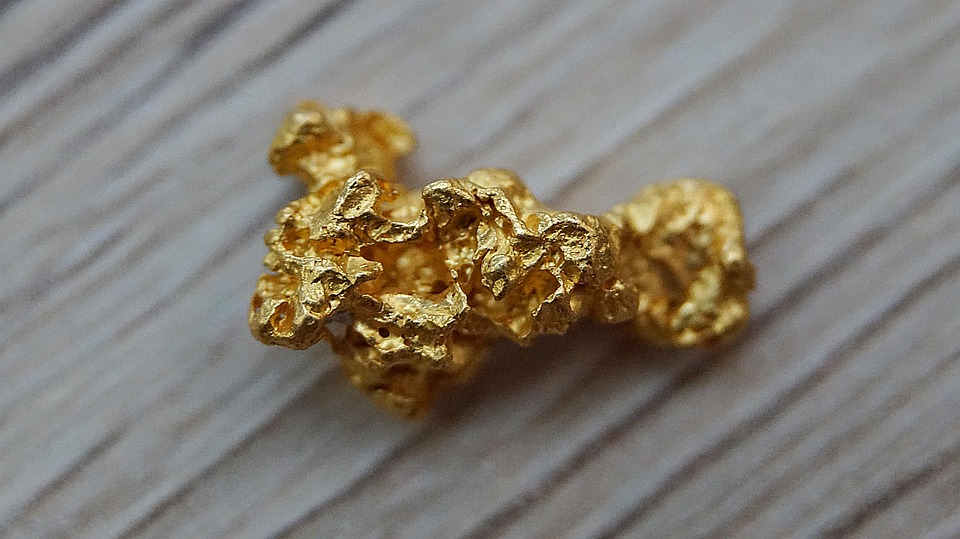
Identify Anomalies: Quickly analyze stream sediments, soils, and rocks to find unusual concentrations of valuable elements like copper, gold (often using pathfinder elements like arsenic), or rare earth elements .
Guide Drilling Programs: Real-time analysis of drill chips allows geologists to adjust drilling plans on the fly, ensuring they don't miss a mineralized zone.
Improve Efficiency: pXRF dramatically speeds up exploration and reduces the number of samples that need to be sent to an expensive off-site laboratory .
2. Mining and Grade Control
Once a deposit is being mined, XRF is crucial for maintaining efficiency:
Ore Grade Control: Quickly analyzing blasted material at the mine face helps distinguish between ore (valuable rock) and waste material. This ensures that only valuable rock is sent to the mill, saving time and money.
Stockpile Management: Miners can analyze stockpiles of ore to manage their inventory and blend materials to meet mill specifications.
3. Environmental Monitoring
Beyond mining, XRF is used to analyze soils and sediments for heavy metal contamination, making it a valuable tool for environmental site assessments and remediation projects .
The EulerX 500 series marks a major advancement in handheld XRF mining analyzers, delivering on-site ore analysis in minutes with no sample preparation. Using the Fundamental Parameters method, it ensures accurate results without calibration standards. Its ability to analyze light elements is critical for mineralogical interpretation and for specific ores like bauxite and limestone. Lightweight and portable, it is ideal for rapid exploration across large areas, while in mining environments, it simplifies ore grade control and concentrate analysis. Adopting the EulerX 500 means faster, more precise, and reliable on-site decision-making.
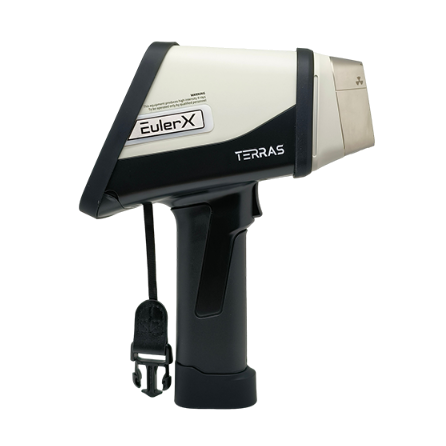
Terras EulerX500 Handheld Mining Analyzer
Conclusion
XRF mineral analysis has revolutionized the way we explore for and understand Earth's resources. From the portability of a handheld device that puts a lab in the palm of a geologist's hand to the stunning elemental maps produced by a micro-XRF, this technology provides critical insights at every scale. XRF is an essential tool for the modern geoscientist.
About Terra Scientific
Terra Scientific is a high-tech manufacturer specializing in the development and application of X-ray technology products. We are committed to becoming a world-class provider of X-ray industrial inspection solutions. Terra Scientific currently offers a range of products to global customers, including handheld alloy analyzer, handheld precious metal analyzer, handheld mining analyzer, benchtop precious metal analyzers, in-line analyzer, and spectrometer modules, along with XRF analyzers. We continuously serve global clients in fields such as mechanical manufacturing, metal processing, aerospace, petrochemicals, mining and geology, food safety, environmental protection, and scientific research.
To learn more, please don't hesitate to contact us via email at sales@terra-scientific.com, or visit our website at http://www.terra-scientific.com
Join Us
Subscribe to our email list for updates & promotions.