 English
 Russian
 French
 Spanish
 Portuguese
 Arabic
 Vietnamese
 Turkish

Gold and Jewelry
A high-tech enterprise focusing on the development and application of X-ray technology products, committed to becoming a leading supplier of X-ray industrial testing solutions.
Benchtop vs. Handheld XRF: Which Analyzer is Right for Your Workflow?
In the precise world of elemental analysis, X-ray Fluorescence (XRF) technology is consistently valued for its speed, accuracy, and versatility. However, when faced with an actual procurement decision, a core dilemma often leaves professionals at a crossroads: Should you choose the powerful benchtop XRF, or the mobile and flexible handheld portable XRF?
Both instruments are based on the same scientific principle—exciting a sample with X-rays and analyzing the characteristic fluorescence emitted to determine its elemental composition. Yet their positioning, design, and application scenarios are distinctly different. Choosing the wrong one can hinder operational efficiency, compromise data integrity, and lead to unnecessary capital expenditure.
The Core Philosophies: Precision Powerhouse vs. Mobile Detective
At their heart, these two tools embody different operational philosophies.
The Benchtop XRF Analyzer is engineered to be a precision powerhouse. It prioritizes the highest possible analytical performance—superior light element detection, the lowest detection limits (often in the parts-per-million range), and exceptional repeatability. To achieve this, it requires a controlled laboratory environment. Samples are typically prepared (crushed, homogenized, pelletized, or presented as liquids) and placed inside a dedicated, shielded measurement chamber. This ensures consistent geometry, eliminates environmental variables, and allows for the use of helium purging or vacuum systems to detect critical light elements like magnesium, aluminum, silicon, phosphorus, and sulfur. Its workflow is "sample-in, data-out," optimized for high-volume testing of similar materials with minimal operator influence on the result.
In contrast, the Handheld Portable XRF Analyzer is designed as the ultimate mobile detective. Its paramount advantage is bringing the lab to the sample, anywhere in the world. It trades a degree of ultimate laboratory-grade precision for the irreplaceable power of immediate, on-the-spot decision-making. It can analyze large, irregular, or immovable objects directly on a factory floor, at a scrap yard, on a pipeline, or in an archaeological trench. There is minimal to no sample preparation. However, this comes with considerations: measurements can be influenced by surface condition, geometry, and operator technique (distance, angle), and its ability to quantify very light elements is typically limited compared to a benchtop system.

Choosing Your Champion: A Guide to Ideal Applications
Your industry and primary use case will often point clearly to one category.
Choose a Benchtop XRF Analyzer if your work revolves around:
A Fixed Laboratory: Your workflow is centralized in a QC lab, R&D facility, or geochemical preparation lab.
Ultimate Accuracy & Compliance: You need to generate data for certified reports, meet stringent regulatory standards (like RoHS, ASTM), or support forensic evidence.
Trace Element and Light Element Analysis: Your materials require quantification of elements like Na, Mg, Al, Si, P, S, or trace metals at very low concentrations (ppm levels).
High-Volume, Prepared Samples: You process hundreds of similarly prepared samples (e.g., powder pellets, fused beads, liquid filters) where automation and rapid sequential analysis are key.
Research & Development: You are developing new materials, catalysts, or ceramics where precise elemental composition and consistency are critical.
Choose a Handheld Portable XRF Analyzer if your work demands:
Mobility & Immediate Answers: Your samples are in the field, on a production line, or are too large to bring to a lab. Speed of analysis directly drives operational decisions.
Positive Material Identification (PMI): You need to verify the alloy grade of pipes, valves, or pressure vessels in oil & gas, power generation, or aerospace to ensure safety and prevent catastrophic mix-ups.
Sorting and Classification: You are sorting scrap metal, mining ore, or recycling electronics, where rapid alloy ID or metal grade verification determines economic value.
Non-Destructive Testing of Objects: You are analyzing priceless artifacts, works of art, or installed components where sampling is impossible or undesirable.
Preliminary Screening: You are conducting environmental site assessments to map soil contamination hotspots, guiding where to take more precise (and expensive) laboratory samples.
Key Decision Factors to Weigh Carefully
Beyond the obvious lab/field divide, consider these nuanced questions:
What are your detection limit requirements? Is percent-level identification sufficient (e.g., alloy sorting), or do you need part-per-million quantification (e.g., precious metals, toxic elements)?
Which specific elements are mission-critical? If your bottom line depends on accurately measuring silicon in ore or phosphorus in steel, a benchtop with vacuum is likely mandatory. If you focus on heavy metals like lead, chromium, or nickel, a handheld may suffice.
Who will operate the instrument, and how often? Benchtop units offer more consistent results across operators. Handhelds require more training to ensure good technique and reproducible data.
What is the total cost of ownership? Consider not just the purchase price, but also the operational cost. A benchtop may require lab space, sample preparation equipment, and gases. A handheld's speed can drastically reduce labor, logistics, and downtime costs in field operations.
How will you use the data? Is it for an immediate "pass/fail" decision on a loading dock, or for a detailed compositional report to a customer or regulator?
The Pi900E utilizes XRF technology to deliver fast, accurate analysis of gold purity and precious metal composition. This portable device features an intuitive interface, real-time results, and wireless connectivity, making it a practical solution for jewelers, dealers, and field applications.
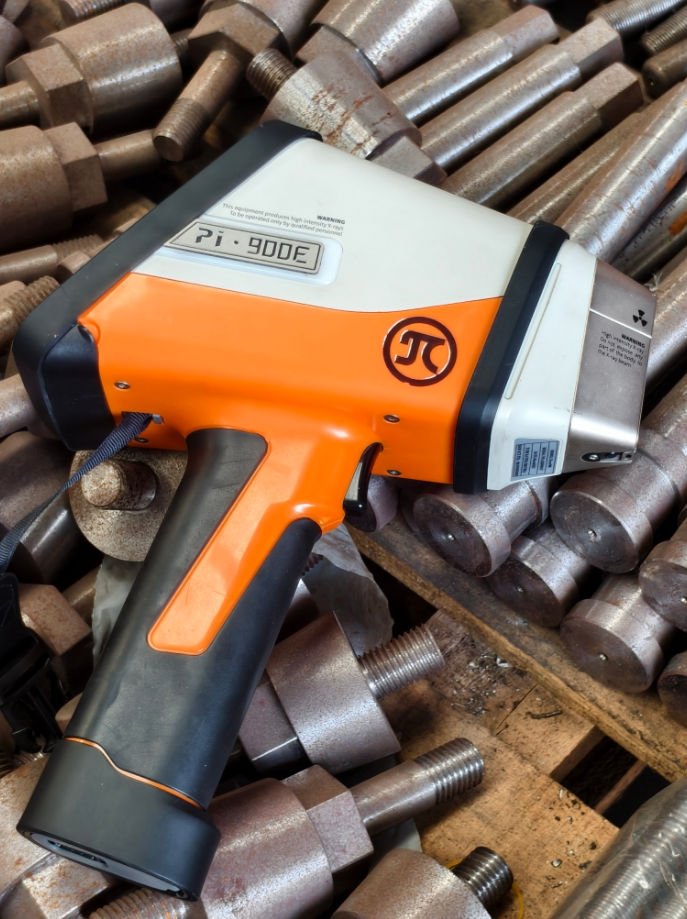
Terras Pi900E Handheld Precious Metal Analyzer
Final Recommendation
There is no universal "best" analyzer—only the best analyzer for your specific situation.
Let uncompromising data quality, trace analysis, and a controlled lab environment guide you to the Benchtop XRF.
Let mobility, speed, in-situ analysis, and immediate decision-making guide you to the Handheld Portable XRF.
By thoughtfully aligning the instrument's core capabilities with the fundamental demands of your daily workflow, you invest in more than just a piece of equipment. You invest in a solution that streamlines operations, empowers your team with the right data at the right time, and ultimately, protects your assets, ensures quality, and drives profitability.
About Terra Scientific
Terra Scientific is a high-tech manufacturer specializing in the development and application of X-ray technology products. We are committed to becoming a world-class provider of X-ray industrial inspection solutions. Terra Scientific currently offers a range of products to global customers, including handheld alloy analyzer, handheld precious metal analyzer, handheld mining analyzer, benchtop precious metal analyzers, in-line analyzer, and spectrometer modules, along with XRF analyzers. We continuously serve global clients in fields such as mechanical manufacturing, metal processing, aerospace, petrochemicals, mining and geology, food safety, environmental protection, and scientific research.
To learn more, please don't hesitate to contact us via email at sales@terra-scientific.com, or visit our website at http://www.terra-scientific.com
Join Us
Subscribe to our email list for updates & promotions.