 English
 Russian
 French
 Spanish
 Portuguese
 Arabic
 Vietnamese
 Turkish

Alloy
A high-tech enterprise focusing on the development and application of X-ray technology products, committed to becoming a leading supplier of X-ray industrial testing solutions.
Buyer's Guide: How to Select the Perfect XRF Instrument for Your Laboratory
Selecting the right X-ray Fluorescence (XRF) analyzer is a significant investment for any laboratory. With options ranging from handheld devices to benchtop behemoths, each promising precision and efficiency, the decision can feel overwhelming. This guide will walk you through the key considerations to ensure you choose the instrument that perfectly aligns with your lab's specific needs and goals.
1. Define Your Primary Application
The first and most critical step is to clearly define what you need the XRF to do. The "best" instrument is entirely dependent on your application.
Material Analysis: Are you testing metals (alloy verification), polymers (restricted substances), soils (contaminants), or geological samples (mineral exploration)?
Key Measurements: Do you need qualitative (what elements are present) or quantitative (exact concentration) results? What is your required detection limit (ppm or ppb)?
Sample Form: Will you analyze solids, powders, liquids, or irregularly shaped objects?
Action Step: Write a detailed specification sheet for your most common samples and required reports.
2. Understand the Technology: EDXRF vs. WDXRF
XRF instruments primarily come in two types, each with its strengths:
Energy Dispersive XRF (EDXRF): More common, especially for portable/handheld models. It simultaneously collects signals from multiple elements, offering faster analysis (often 1-2 minutes). Ideal for qualitative and semi-quantitative work, alloy sorting, and rapid screening.
Wavelength Dispersive XRF (WDXRF): Uses crystals to separate element wavelengths, providing superior spectral resolution and detection limits. It’s the gold standard for high-precision quantitative analysis in quality control and research but is typically a larger, more expensive benchtop instrument.
Takeaway: For routine, fast identification and sorting, choose EDXRF. For the highest precision in a controlled lab environment, WDXRF is often necessary.
3. Choose the Form Factor: Handheld vs. Benchtop
Handheld/PORTABLE XRF: Offers unparalleled flexibility for on-site testing—at production lines, scrap yards, or field sites. Modern handhelds are powerful but may have slightly higher detection limits than lab-grade instruments. They excel at alloy ID, positive material identification (PMI), and environmental screening.
Benchtop XRF: Designed for the laboratory. They offer more power, stability, advanced features (like helium purge for light elements), automated sample handling, and typically superior precision. They are the workhorses for high-volume, compliance-driven, or R&D work.
Question to Ask: Do your samples come to the lab, or does the instrument need to go to the samples?

4. Evaluate Key Performance Specifications
Look beyond the brochure and understand what the numbers mean for you:
Elemental Range: Can it measure from magnesium (Mg) to uranium (U)? Do you need to measure lighter elements like sodium (Na) or aluminum (Al)? Measuring below magnesium often requires a vacuum or helium purge.
Detection Limits: What is the minimum concentration it can reliably detect for your elements of interest? Compare specs using similar sample types.
Accuracy & Precision: Request demonstration data or application notes for a sample matrix like yours. How reproducible are the results?
Throughput & Automation: How many samples per day do you process? Consider instruments with autoloaders (like 10-, 12-, or even 50-position turrets) to run unattended, especially overnight.
5. Consider the Total Cost of Ownership (TCO)
The purchase price is just the beginning. Factor in:
Consumables: Costs for calibration standards, sample cups, films, and helium (if required).
Maintenance: Service contracts, source replacement (X-ray tubes typically last 3-5 years), and detector cooling systems.
Software & Training: Is the software intuitive? Does the vendor offer comprehensive training and ongoing application support?
Regulatory Compliance: Does the instrument help you meet relevant standards (e.g., ASTM, ISO, ROHS, EPA)?
6. Demand a Demonstration or Trial
Never buy an XRF instrument blind. A reputable vendor will offer:
Application Feasibility Testing: They will analyze your actual samples (or close analogues) and provide a report.
Live Demonstration: A chance for your team to operate the instrument and software.
Reference Checks: Speak to existing customers with similar applications.
During the demo, assess not just the data, but the user experience. Is the software logical? How easy is sample preparation?
7. Assess the Vendor Partnership
You are entering a long-term partnership. Evaluate:
Technical & Application Support: Is help readily available locally or only via a call center?
Service Network: How quickly can a field engineer respond if needed?
Reputation & Longevity: Choose a vendor with a proven track record in your industry.
Combining laboratory accuracy with field-portable robustness, the Pi900E X-Ray Fluorescence Spectrometer performs non-destructive analysis from Magnesium to Uranium. It delivers immediate results for alloy identification, scrap sorting, and contamination checks. Enhanced by an intuitive touchscreen and seamless Wi-Fi/USB links, it transforms data reporting for quality assurance and environmental screening.
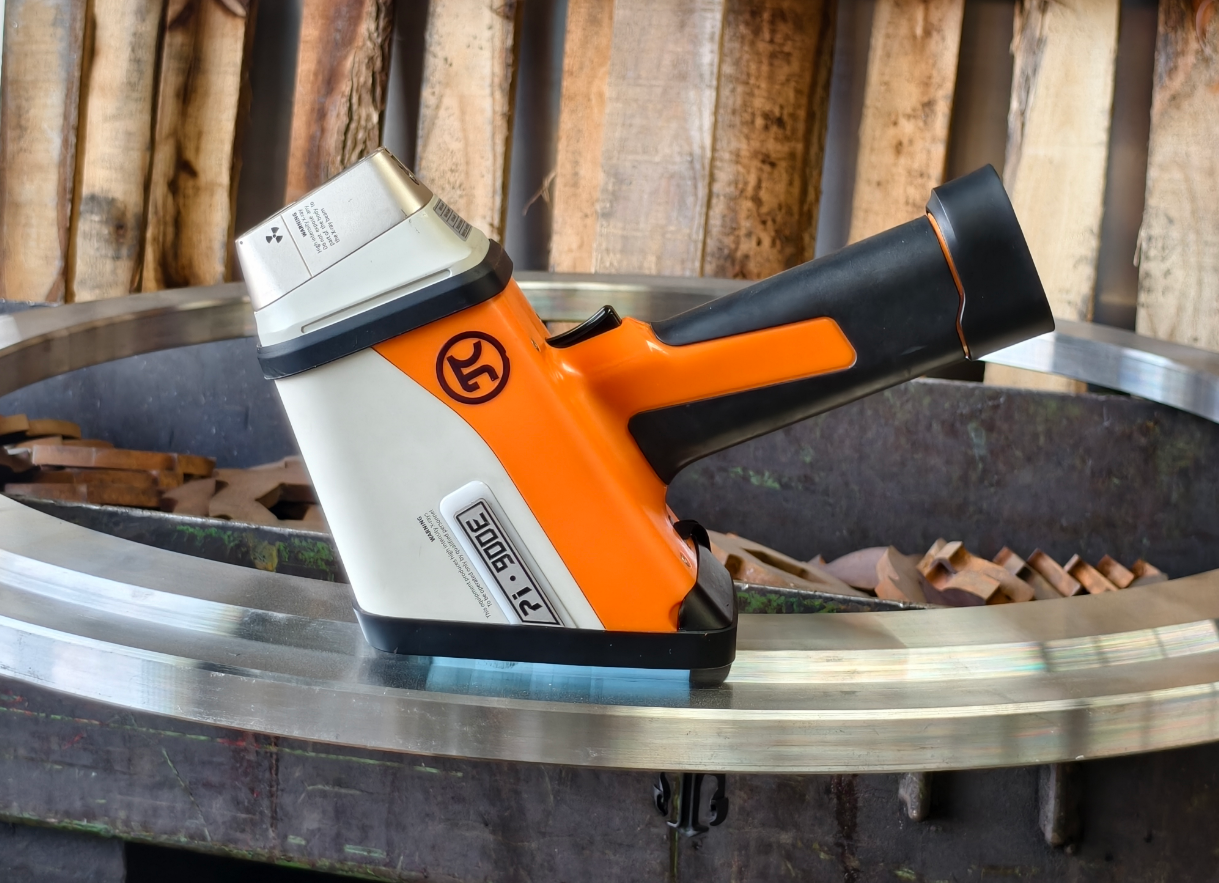
Terras Pi900E Handheld Alloy Analyzer
Conclusion: Your Perfect Fit
There is no one-size-fits-all XRF solution. The perfect instrument for your laboratory is the one that seamlessly integrates into your workflow, delivers the specific data you need with confidence, and is supported by a vendor you trust.
Start by locking down your application requirements. From there, the choice between handheld and benchtop, EDXRF and WDXRF, will become clearer. Scrutinize the specs, calculate the true cost, and, most importantly, test it with your own samples. By following this structured approach, you'll move from feeling overwhelmed to making a confident, informed investment that will power your laboratory's success for years to come.
About Terra Scientific
Terra Scientific is a high-tech manufacturer specializing in the development and application of X-ray technology products. We are committed to becoming a world-class provider of X-ray industrial inspection solutions. Terra Scientific currently offers a range of products to global customers, including handheld alloy analyzer, handheld precious metal analyzer, handheld mining analyzer, benchtop precious metal analyzers, in-line analyzer, and spectrometer modules, along with XRF analyzers. We continuously serve global clients in fields such as mechanical manufacturing, metal processing, aerospace, petrochemicals, mining and geology, food safety, environmental protection, and scientific research.
To learn more, please don't hesitate to contact us via email at sales@terra-scientific.com, or visit our website at http://www.terra-scientific.com
Join Us
Subscribe to our email list for updates & promotions.