 English
 Russian
 French
 Spanish
 Portuguese
 Arabic
 Vietnamese
 Turkish

soil
A high-tech enterprise focusing on the development and application of X-ray technology products, committed to becoming a leading supplier of X-ray industrial testing solutions.
What is XRF Soil Testing? A Beginner's Guide to Rapid Elemental Analysis
Introduction: The Hidden World Beneath Our Feet
Soil isn't just dirt. It's a complex, living matrix of minerals, organic matter, and—crucially—chemical elements. These elements, from vital nutrients like potassium and zinc to potentially harmful heavy metals like lead and arsenic, tell the story of a piece of land. For decades, understanding this story meant sending samples to a lab and waiting weeks for results. Enter XRF Soil Testing, a revolutionary technology that has transformed how we analyze soil in real time. If you've heard the term but aren't quite sure what it means, this beginner's guide is for you.
What Does XRF Stand For?
XRF stands for X-ray Fluorescence. Let's break that down without the complex physics:
X-ray: A type of high-energy light wave, similar to what's used in medical imaging.
Fluorescence: The process where a material absorbs light and then re-emits it at a different, characteristic energy.
In simple terms, an XRF analyzer shoots a beam of X-rays at a soil sample. The atoms in the soil absorb this energy and become temporarily excited. As they return to their normal state, they emit their own unique "fingerprint" of fluorescent X-rays.

How Does an XRF Analyzer Work? It's All About the "Fingerprint"
The magic is in the detector. The analyzer doesn't just see a flash of light; it captures the specific energy signature of each emitted X-ray. Every chemical element on the periodic table emits a signature at a unique energy level.
The instrument fires a safe, focused X-ray beam at the prepared soil sample.
Atoms in the soil get excited and fluoresce, sending back their unique signals.
The detector collects these signals.
The onboard computer instantly decodes the energy signatures, identifying which elements are present and calculating their concentrations (typically in parts per million - ppm).
The result? In several seconds, you have a detailed breakdown of the soil's elemental composition displayed right on the screen.
Key Advantages of XRF Soil Testing: Why It's a Game-Changer
Why has this technology become so popular across industries? Here are its core benefits:
Speed: Get results on-site in seconds or minutes, not weeks. This enables immediate decision-making.
Portability: Modern handheld XRF analyzers are about the size of a cordless drill, allowing testing anywhere—a farm field, a construction site, a potential brownfield, or your backyard.
Cost-Effectiveness: While the initial instrument investment is significant, it eliminates the high per-sample cost and wait times of lab analysis, saving substantial money on large projects.
Non-Destructive: The test doesn't consume or destroy the sample. You can test it and then send it to a lab for confirmatory analysis if needed.
High-Throughput: It enables the screening of hundreds of samples per day, allowing for highly detailed soil mapping and contaminant plume delineation.
Common Applications: Who Uses XRF Soil Testing?
You'll find XRF analyzers in the hands of a diverse group of professionals:
Environmental Consultants: Rapidly screening sites for heavy metal contamination (lead, arsenic, cadmium, etc.) during Phase I and II Environmental Site Assessments (ESAs) and remediation projects.
Precision Agriculturists & Farmers: Mapping nutrient levels (P, K, S, Ca) and identifying toxic elements to create precise fertilizer and amendment plans, boosting crop health and yield.
Geologists & Miners: Exploring for mineral deposits and quickly analyzing ore grades.
Regulatory & Government Agencies: Performing compliance checks and monitoring soil quality.
Homeowners & Gardeners: Checking for lead in urban garden soils or understanding baseline soil fertility.
Understanding the Limitations: A Tool for Screening
It's important to understand what XRF is not.
It's Primarily a Screening Tool: For absolute regulatory decisions, results from a certified laboratory (using methods like ICP-MS) are usually required. XRF provides incredibly accurate and precise screening data to guide where to send those expensive lab samples.
Sample Preparation Matters: For the most accurate results, soil is often dried, homogenized, and sieved. Field testing on loose, moist soil can still give excellent directional data.
Detection Limits: It may not detect trace elements at very low concentrations as effectively as a lab can.
Soil contamination from heavy metals such as cadmium, mercury, lead, and chromium—often resulting from industrial, agricultural, or waste disposal activities—poses a lasting threat to human health. Screening and remediation remain major challenges. The EulerX 600 Handheld Soil Analyzer provides an effective solution by enabling rapid, on-site XRF analysis of soils and sediments. This internationally recognized method detects hazardous metals in seconds, significantly reducing the number of lab samples, cutting analysis time and cost, and helping to accurately delineate contaminated zones for targeted remediation.
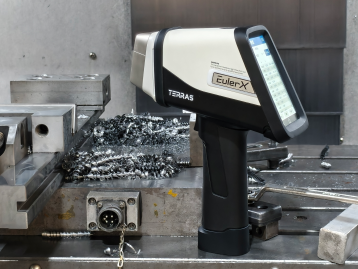
Terras EulerX600 Handheld Soil Analyzer
Conclusion: Unlocking Immediate Soil Insights
XRF soil testing has democratized access to powerful elemental analysis. By turning what was a slow, lab-bound process into an immediate, on-site practice, it empowers professionals and curious individuals alike to make faster, more informed decisions about the land.
Whether you're ensuring a playground is safe, optimizing a thousand-acre farm, or investigating an industrial site, XRF technology provides the first—and often most crucial—window into the hidden elemental world of soil.
About Terra Scientific
Terra Scientific is a high-tech manufacturer specializing in the development and application of X-ray technology products. We are committed to becoming a world-class provider of X-ray industrial inspection solutions. Terra Scientific currently offers a range of products to global customers, including handheld alloy analyzer, handheld precious metal analyzer, handheld mining analyzer, benchtop precious metal analyzers, in-line analyzer, and spectrometer modules, along with XRF analyzers. We continuously serve global clients in fields such as mechanical manufacturing, metal processing, aerospace, petrochemicals, mining and geology, food safety, environmental protection, and scientific research.
To learn more, please don't hesitate to contact us via email at sales@terra-scientific.com, or visit our website at http://www.terra-scientific.com
Join Us
Subscribe to our email list for updates & promotions.